Developing a Comprehensive Handwriting Dataset for Early Detection of Numeric Dysgraphia
Across Sri Lanka
8,000+
Handwriting Images
482
Participants
10+
Districts
6-10 yrs
Age Range
Participant Breakdown
Numeric Dysgraphia
Non-Numeric Dysgraphia
Overview
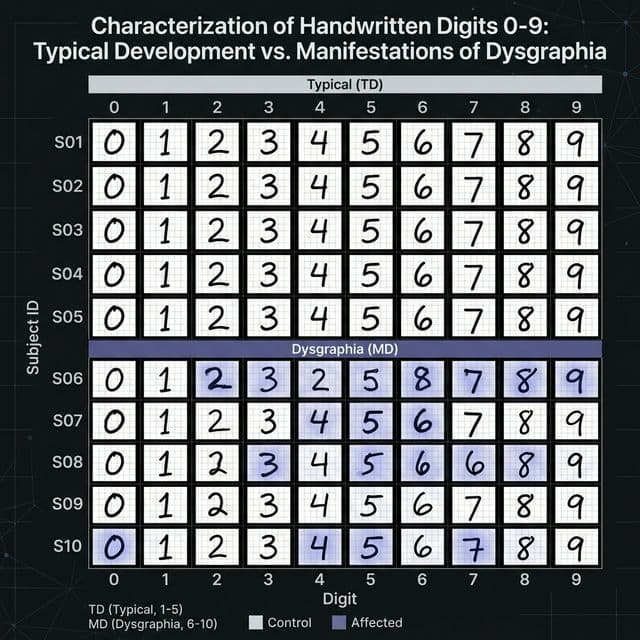
This study addresses a significant gap in resources for diagnosing numeric dysgraphia among Sri Lankan children by developing a comprehensive dataset of handwritten numbers (0-10). The dataset was collected 8000 handwriting images from 482 participants (122 numeric dysgraphia and 360 non-numeric dysgraphia participants) through handwriting assessments involving children aged 6 to 10 years, utilizing both clinical and control groups across various districts in Sri Lanka.
Methodology
Data was collected through handwriting assessments involving children aged 6 to 10 years, utilizing both clinical and control groups across various districts in Sri Lanka (Ampara, Anuradhapura, Colombo, Panadura, Piliyandala, Moratuwa, Kurunegala, Matara, Matale, Kegalle) and also including Senehasa Education Resource Research & Information Institute and Lady Ridgeway Hospital for Children (LRH) ensuring geographical diversity.
Impact & Applications
This dataset is crucial for training machine learning models, particularly Convolutional Neural Networks (CNNs), to detect numeric dysgraphia early and accurately. The availability of diverse samples facilitates robust comparative studies, enabling researchers to explore unique numeric handwriting associated with dysgraphia in Sri Lanka. This foundational work sets the stage for developing AI-driven diagnostic tools that support early intervention and educational strategies tailored to the needs of children with numeric dysgraphia.
Data Collection Areas
Partner Institutions
Keywords